Let me say the quiet part out loud: without culture, everything else falls apart.
You can have the best drills, the best equipment, and the best skill progressions in the region — pair them with a bad culture and the result is still a loss. Culture is the 800-pound gorilla in the room, and gymnastics is finally changing fast in this area. Thankfully.
The off- and preseason are the single best time to do this work. Nobody is peaking, the meet pressure is off, and you have space for the honest conversations that get crowded out once the season starts. So this week I’m not giving you drills. I’m giving you the five layers of culture change, built from the trenches — and the order matters, because it moves from the inside out.
First, know what you’re aiming for. A healthy culture makes progress even through adversity, communicates openly and transparently, addresses issues with professionalism and respect, keeps health first when injuries happen, chases progress over perfection, and generally feels upbeat. An unhealthy one runs on low motivation, gossip, no communication about the real issues, high injury and burnout rates, and people who are frustrated and stuck. Be honest about which one describes your gym right now.
Table of Contents
Layer 1 — The hardest one: YOU
Everyone’s instinct when they want to fix a culture is to look outward — the other coaches, the parents, the athletes. the judges, the federation, or “kids these days”. The key is to look inward first. This is the whole premise of Ego Is the Enemy and Lead Yourself First: you cannot lead a group anywhere you haven’t been willing to go yourself. Sit with the real questions: Why am I involved in gymnastics? What are my actual values? Do my daily choices align with those values? What are my fears and insecurities?
My own journey ran from chasing personal gain toward teaching life values, from wanting status and praise toward humility and relationship-building, from being paralyzed by social judgment toward acceptance and work. My strong suggestion: journal on those questions for a week. Don’t be too harsh on yourself. Ask one or two close friends for honest but needed feedback. Then commit to small changes. Everything above this layer is built on it.
Layer 2 — One-on-one dynamics: trust is built in microevents
Culture is not built in the big team meeting. It’s built in microevents — the small daily interactions — and the foundation of a high-quality microevent is listening. As the saying goes, “the lowest level of listening is waiting to speak.” In The Culture Code, Daniel Coyle calls these small signals “belonging cues,” and his point is exactly this: safety and trust are transmitted in tiny, repeated moments, not in slogans on the wall.
Here’s the test. What is your honest first verbal and non-verbal reaction when a fellow coach critiques your actions? When a gymnast says her back hurts? When she’s scared to go for a skill? When a parent approaches with a concern? How you handle those moments is a huge signal of the values you actually hold — and those values are what construct the global culture.
The protocol I use: listen first with an open mind, let them know you understand by repeating key points back, then communicate your own point of view — and always critique the behavior, never the person. Never lose your cool and escalate. That last rule is the practical version of what the research on psychological safety shows drives high-performing teams: people take smart risks and tell you the truth only when they trust they won’t be attacked for it.
Picture girls in the chalk bucket mid bar circuit, clearly avoiding their assignment to socialize.
Old me would shout across the gym: “Girls, get out of the chalk bucket, you’re driving me nuts. Kelsey, don’t be lazy, go do drills.”
Updated me walks over and says calmly: “Girls, I’m feeling a little frustrated right now. You told me you want these new skills. I spent this weekend researching and developing the best plan to help you get those skills. Talking instead of doing the drills that get you there isn’t showing that. I’d appreciate more time on the drills. If you don’t want to make that choice, I’ll have to ask you to work somewhere else so you’re not distracting everyone.”
Same standard. Completely different culture. And my single biggest piece of advice at this layer: ask about, care about, and listen to the non-gymnastics stuff. Health, then great humans, then great gymnasts — in that order.
Layer 3 — Group dynamics: social support buffers stress
Zoom out to the group. This is where sport psychology research is genuinely useful: social support is one of the strongest buffers against stress (the stress-buffering hypothesis), and a big part of that buffer is athletes having a sense of control and being heard. That has to show up in your daily interactions, not just a once-a-year team-building day.
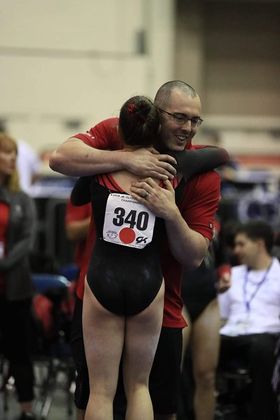
Now, this doesn’t mean a free-for-all. I love the concept of “On/Off” many coaches use — there’s a time for connection and a time for work, and good coaches signal the difference clearly. Use both gymnastics and non-gymnastics moments to build cohesion: a Stick It contest, a team movie night. Small rituals, repeated, become identity.
Layer 4 — Intergroup dynamics: break down the silos
Most gyms quietly splinter into silos — level groups, event groups, coaching cliques. This is the core problem General McChrystal tackles in Team of Teams: independently excellent units still fail when they don’t share information and trust across boundaries.
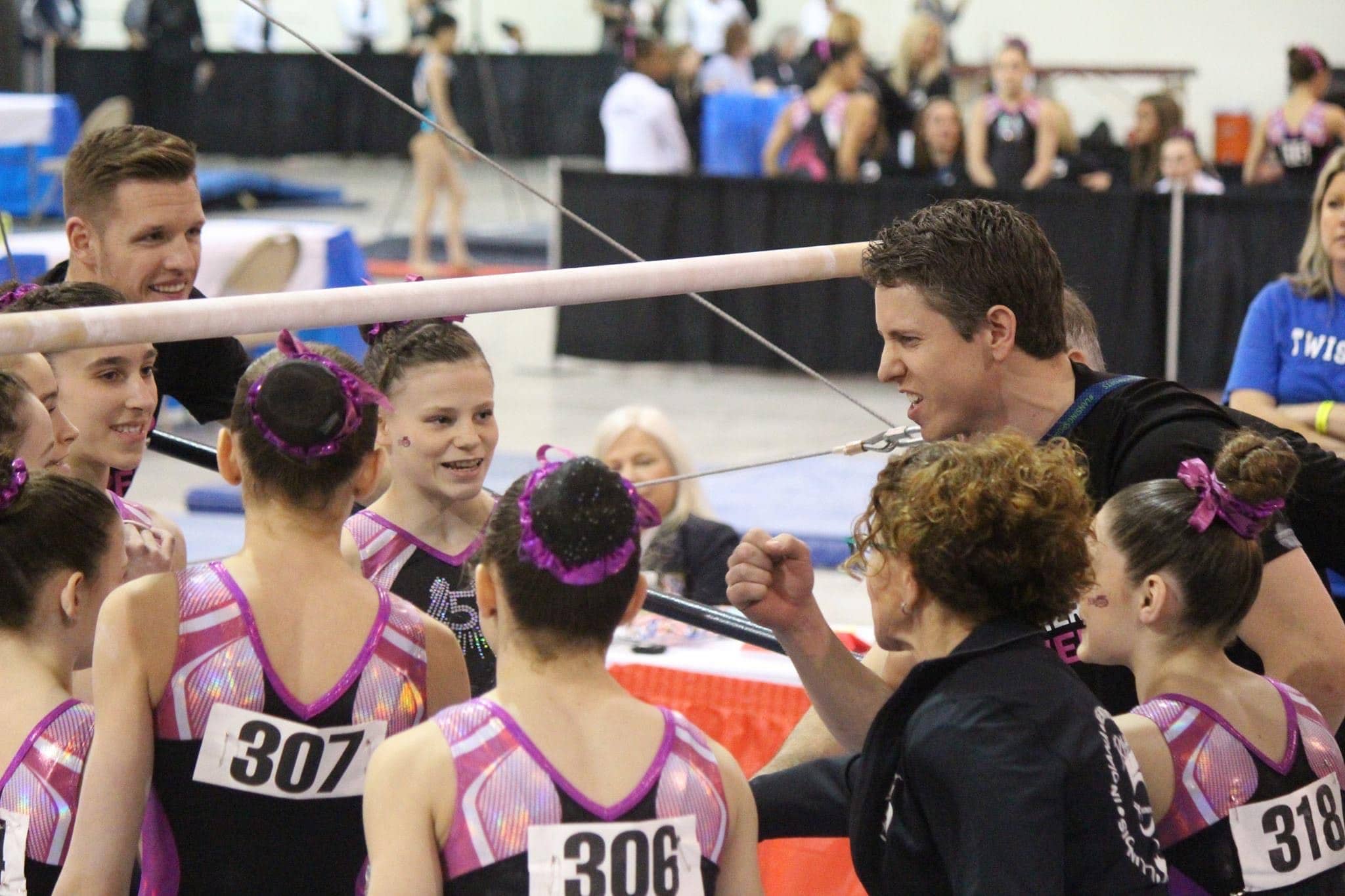
So make “Family Guidelines” together, as a group, so the standard is shared rather than imposed. Mix coaching and athlete groups. Run big/little sister or brother programs. Do team game nights, charity or holiday events, and show up to support each other at meets. And remember — intergroup work is for the coaching staff too, not just the athletes.
Layer 5 — The “tribe”: carry your culture code everywhere
The outermost layer is the whole gym, and it comes down to a few simple, repeatable commitments. Be nice at meets. Carry your “culture code” with you wherever you represent the gym. Remember that your daily choices reflect your values — every single one is a vote for the culture you say you want. This is the through-line of Extreme Ownership: leaders own everything in their world, and the standard you walk past is the standard you set.
If you’re serious about building a better culture, here’s my parting advice, and it’s a real sequence: (1) work on yourself first, (2) organize a meeting with your coaches and be ready for some tough conversations, (3) then organize a meeting with your athletes, (4) make a plan and make small changes, and (5) then never stop working on it. Culture isn’t a project you finish. It’s a practice you keep.
Want to go deeper on the frameworks, the meeting scripts, and the tools to actually run this with your staff and athletes? This is the heart of what I coach inside The Hero Lab — the culture systems, the athlete and coach communication frameworks, and the resources to lead the hard conversations well. Use code HEROINSIDER for 25% off your first month, and make this off-season the one where your culture finally caught up to your coaching. Click HERE to learn more

— Dave
Dr. Dave Tilley, DPT, SCS, CSCS — SHIFT Movement Science
References & Further Reading
- Coyle, D. The Culture Code: The Secrets of Highly Successful Groups.
- Willink, J. & Babin, L. Extreme Ownership: How U.S. Navy SEALs Lead and Win.
- Holiday, R. Ego Is the Enemy.
- Kethledge, R. & Erwin, M. Lead Yourself First: Inspiring Leadership Through Solitude.
- McChrystal, S. Team of Teams: New Rules of Engagement for a Complex World.