Here’s the exciting part: bigger splits, better leaps, and higher scores next season are absolutely within reach — and they come from working smarter, not just stretching harder. The off-season is your window to give your gymnasts real, usable flexibility: range that’s safe, that holds up under pressure, and that actually shows up in their skills. Instead of cranking on end range and hoping, you can use a few specific, proven tools to build split range the right way — protecting your athletes from overuse injury while unlocking the range they need to shine. This is the season you get ahead.
The common myth about is flexibility is that it isn’t just about stretching harder. Great research from Thomas et a showed that consistency is more important than intensity as the base for actually improving rage of motion for things like better splits and better overhead shoulder flexibility. Beyond that, other great research (here and here) has suggested we stack 5 layers of specific things to maximize our flexibility training, and get it to transfer to things that matter like leaps and skills. I’ll cover those in todays blog posts
Table of Contents
1. Screen First — Assess, Don’t guess
Before you program anything, screen. A simple split floor screen — right, left, and middle (straddle) — tells you what’s actually limiting the athlete, so you stop applying the same stretch to every kid.
- Limited split range? Start with the tissue: hamstring, inner thigh, and quad soft-tissue work and targeted stretching, then layer in active flexibility.
- Range looks good but the skill doesn’t? The limiter isn’t length — it’s control. Shift the focus to glute and core strength, active flexibility, and technique.
This one step is the difference between a program that fits the athlete and a program that just adds load to a problem you never diagnosed.
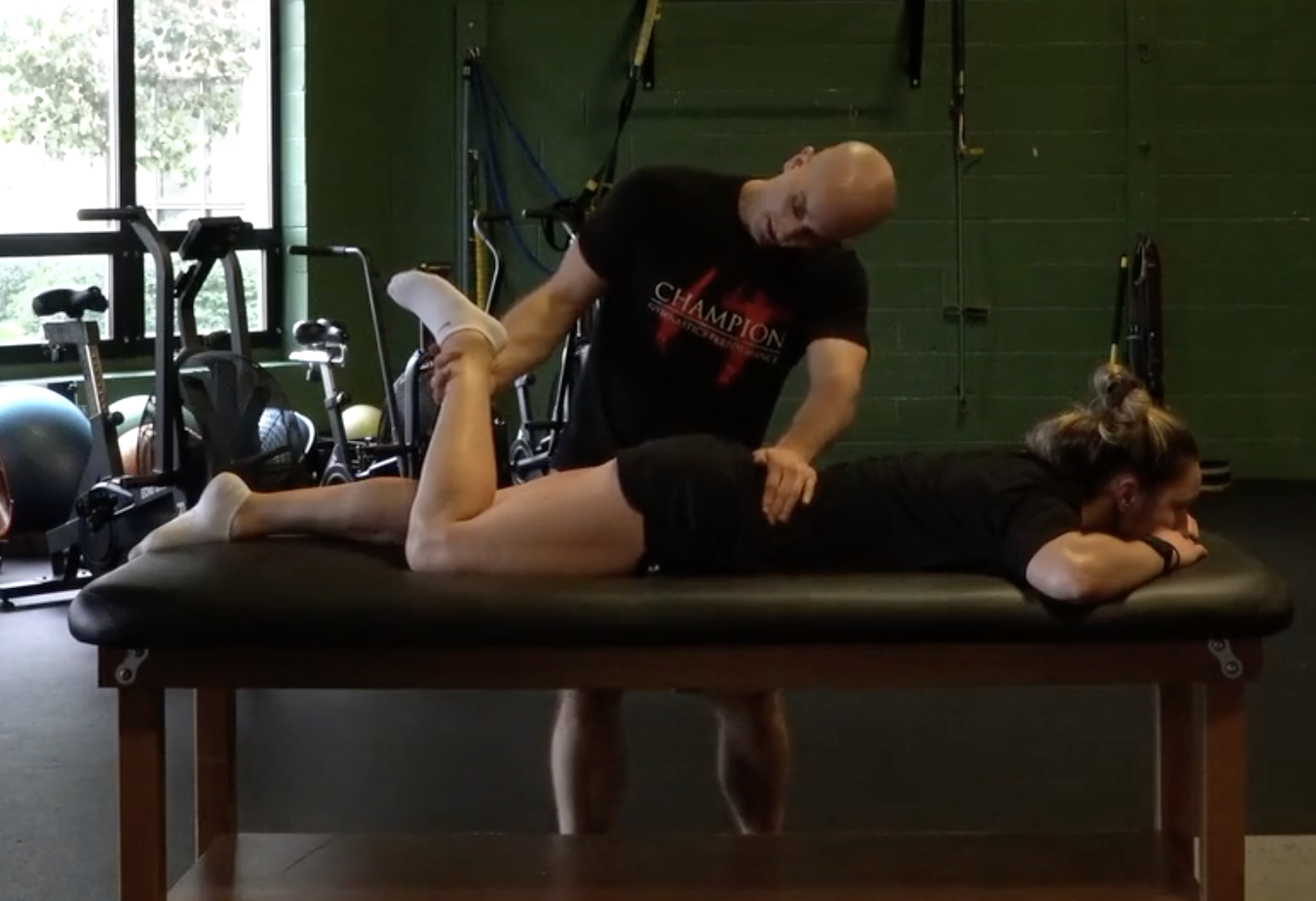
2. Soft Tissue Xare — Target Muscles, Not Joints
Muscle stiffness builds up with training volume and especially during growth spurts, so soft-tissue care is maintenance, not a luxury. Two tools, with real dosing:
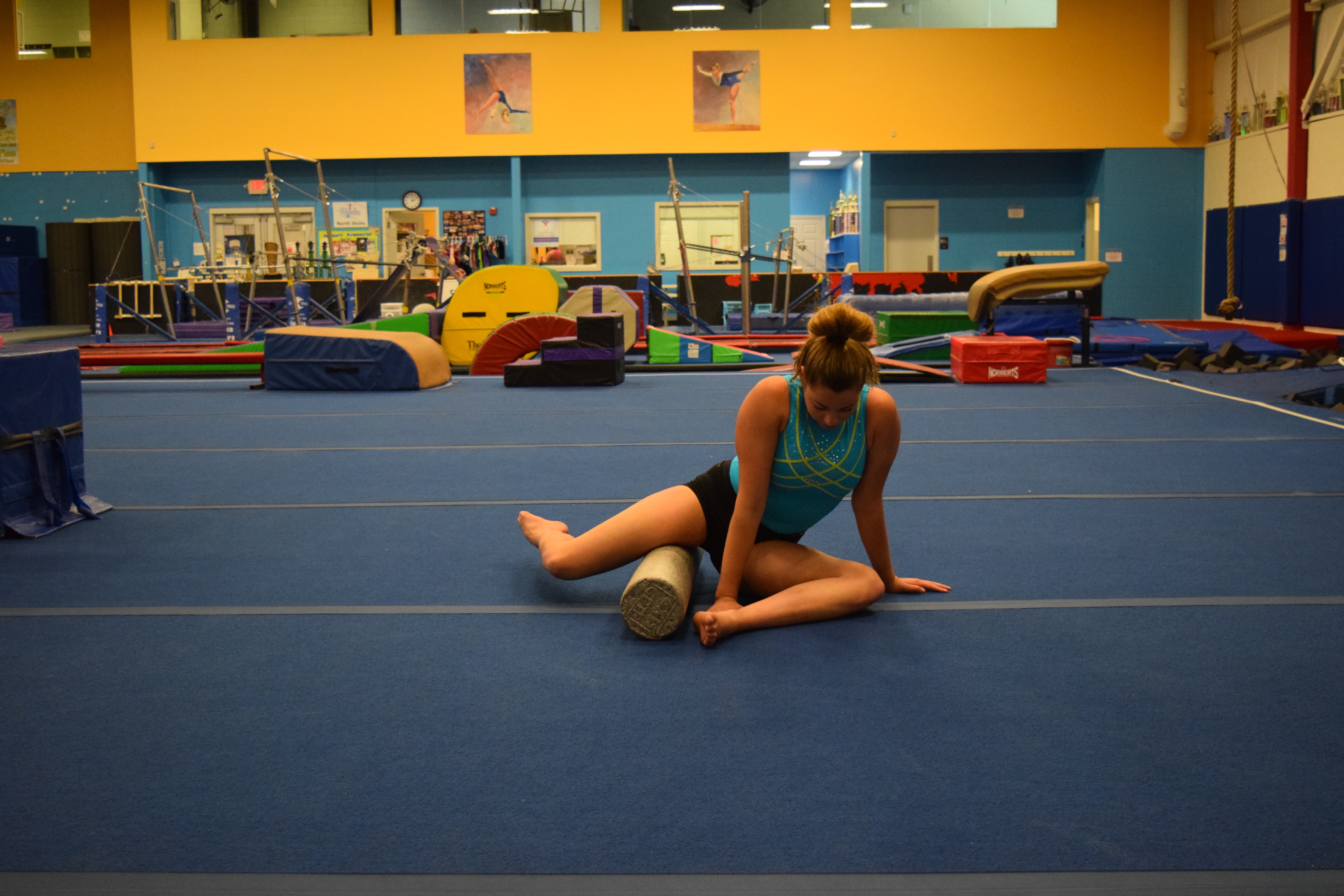
- Foam roll / lacrosse ball: inner thigh, quad, hamstring, glutes — 30–60 seconds each, kept around a 3–4 out of 10 discomfort. Not a pain contest.
- Targeted static stretching: roughly 2 × 30 seconds per muscle group per day, 5–6 days a week — about 5 minutes total per week per muscle group. Static stretching looks best for building flexibility (Thomas et al., 2018), though active and PNF work too.
The critical mindset: you’re trying to change the muscle, not stretch the ligaments and joint capsule that stabilize a hip. That’s why alignment and technique matter, and why consistency beats intensity. Much of the fast, day-to-day range you see is actually your nervous system’s stretch tolerance changing (Ben & Harvey, 2010; Weppler & Magnusson, 2010) — real tissue change is a slower, more consistent process.
3. Build Length with Eccentrics — and balance it
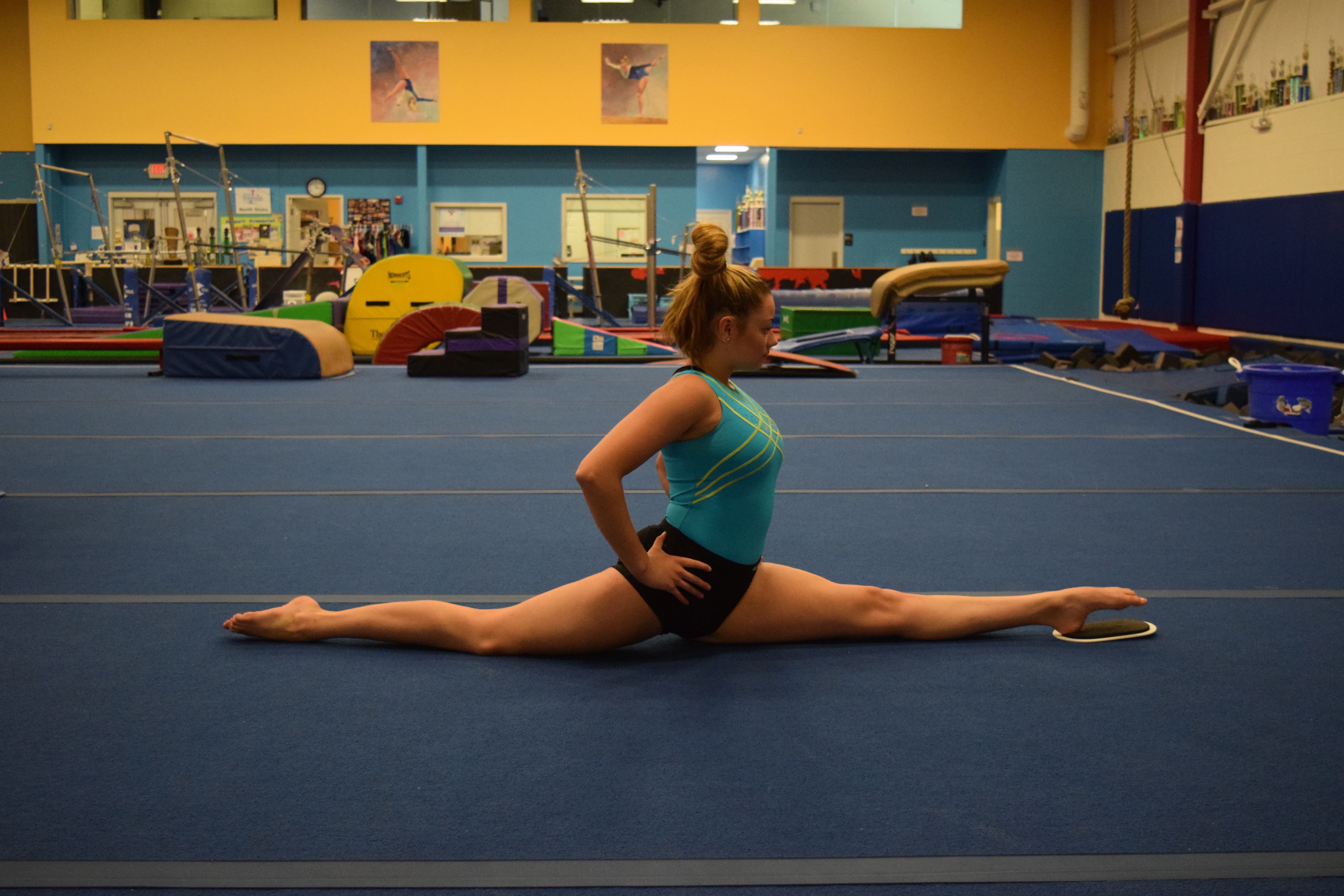
Here’s where the science gets exciting and most flexibility programs stop short. Eccentric strength training increases muscle fascicle length — it literally adds sarcomeres in series — which is why it improves flexibility rather than stealing it (Nelson & Bandy, 2004; O’Sullivan et al., 2012; Blazevich et al., 2007). Sample hip protocol:
- Hip eccentrics: 2–3 sets of 5 reps with a slow 5-second lowering — split sliders, single-leg deadlifts, split squats.
- Strength balance: 2–3 sets of 10–12 for glutes, hip rotators, and hamstrings.
And the guardrail: don’t feed the fire. If a muscle group is already stiff and overworked, hammering it with more volume backfires. Balance is what keeps new range usable.
4. Make it stick — active flexibility and technique
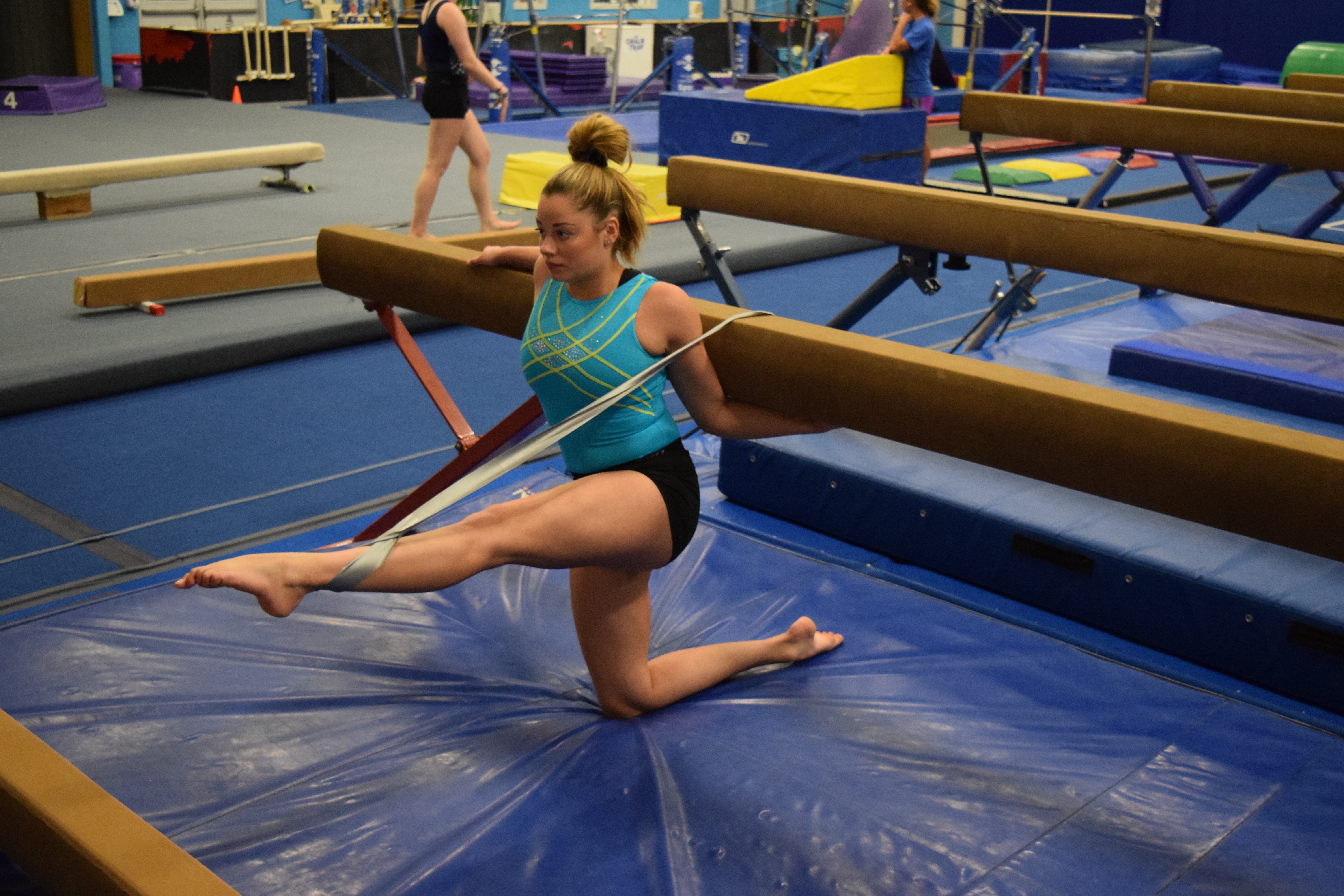
Passive flexibility does not automatically transfer to skills, and strength alone isn’t enough either. The bridge is active flexibility — controlling the range you’ve built — layered with basics and shape-change drills. We want to use the basic soft tissue prep, stretching, and eccentrics to open a window where we have some more available range, and then transfer it specifically to a skill we want to see improve, so the nervous system hangs on.
Then it becomes skill-specific: split leaps, needle drills, bar shapes, done daily. Without the technique layer, the range you fought for never actually shows up in a routine.
5. Put it in a circuit — the real-life system
Nobody has time to do all of this for every athlete, and you don’t need to. Pick 2–3 exercises per layer that fit your athletes, time, space, and equipment, and build them into a circuit:
- 3 upper-body stations (~15 min)
- 3 lower-body stations (~15 min)
- 1–2 times per week (~30 min total) — with the daily soft-tissue and active-flex work happening in shorter doses.
Sample lower-body split circuit (~15 min):
1. Foam roll inner thigh, quad, hamstring, glute — 30–60s each (3–4/10)
2. Targeted static stretch — 2 × 30s per group (couch stretch, seated straddle, hamstring)
3. Split-slider eccentric — 2–3 × 5, 5s lower, each leg
4. Single-leg RDL — 2–3 × 8–10
5. Glute bridge or hip thrust — 2–3 × 10–12
6. Active flex finisher — needle-kick walk-ins or active leg lifts, 2 × 10, into a controlled split hold
Run it consistently for a full off-season block and you’ll see range that holds under competition, not just on the mat during stretch time.
One more thing for the genuinely stiff athlete who “picked the wrong parents”: don’t force it. Be a good human, have an honest conversation, get a gymnastics-specific medical assessment, and individualize the strength and skill profile. That’s not giving up — that’s protecting a career.
Want the full system — the screens, the exercise libraries, and the ready-to-run upper and lower circuits?
This is exactly what I break down inside The Hero Lab: the split and straddle screens, the eccentric progressions, and the plug-and-play flexibility circuits I use with the programs I consult for.
Use code HEROINSIDER for 25% off your first month, and build your athletes a flexibility block this off-season that actually changes their splits. [Click Here]
— Dave
Dr. Dave Tilley, DPT, SCS, CSCS — SHIFT Movement Science
References & Further Reading
- Ben, M. & Harvey, L.A. (2010). Regular stretch does not increase muscle extensibility: a randomized controlled trial. Scand J Med Sci Sports.
- Weppler, C.H. & Magnusson, S.P. (2010). Increasing muscle extensibility: a matter of increasing length or modifying sensation? Phys Ther.
- Thomas, E. et al. (2018). The relationship between stretching typology and stretching duration: effects on range of motion. Int J Sports Med.
- Nelson, R.T. & Bandy, W.D. (2004). Eccentric training and static stretching improve hamstring flexibility of high school males. J Athl Train.
- O’Sullivan, K., McAuliffe, S. & DeBurca, N. (2012). The effects of eccentric training on lower limb flexibility: a systematic review. Br J Sports Med.
- Blazevich, A.J. et al. (2007). Influence of concentric and eccentric resistance training on architectural adaptation in human quadriceps. J Appl Physiol.
- Cheatham, S.W. et al. (2015). Effects of self-myofascial release using a foam roll on range of motion, recovery, and performance: a systematic review. IJSPT.
- Lloyd, R.S. & Oliver, J.L. (eds.). Strength and Conditioning for Young Athletes: Science and Application.
- Laursen, J.B. et al. (2014). Effectiveness of exercise interventions to prevent sports injuries: a systematic review and meta-analysis. Br J Sports Med.